


 Back to News & Events
 Designing reliable electronic systems for use on Earth is a complex challenge. In space, that challenge evolves into something far more extreme. Space-grade power supplies are engineered to survive the vacuum, temperature extremes, and intense radiation of space, all while powering critical mission systems from communication payloads to navigation sensors for years or even decades.
At Horizon Electronics, our exclusive partnership with VPT brings Israeli space programs the most advanced space-qualified DC-DC converters and semiconductor solutions. Complementing this, our new Space application page showcases how we deliver these essential technologies to mission-critical applications in satellites, probes, and ground-testing infrastructure ensuring performance where failure is not an option.

The Demands of Space Applications
Space is the most unforgiving environment for engineered systems, and power supplies face some of the toughest requirements of all. Electronics must withstand constant exposure to cosmic radiation and solar particles that cause both long-term material degradation known as Total Ionizing Dose (TID) and immediate failures triggered by Single Event Effects (SEE). At the same time, spacecraft endure violent swings in temperature, from as low as –150 °C in shadow to over +120 °C in sunlight, with no air to dissipate heat. This forces designers to adopt conduction and radiation-based thermal management strategies that can operate reliably in a vacuum.
Reliability is equally uncompromising. Once a satellite or probe is launched, repair is impossible, meaning power systems must achieve Mean Time Between Failure (MTBF) figures measured in millions of hours. They must also survive the intense mechanical stresses of launch, including severe vibration, acoustic energy, and shock loads that would overwhelm conventional systems. And because size, weight, and efficiency dictate the cost and feasibility of every mission, space-grade converters must deliver maximum power density and efficiency while minimizing volume and mass a delicate balance captured by the industry’s focus on SWaP-C (Size, Weight, Power, and Cost).
Key Design Considerations
- Radiation Tolerance & Mitigation: Employ hardened semiconductors and selective RLAT-tested components. Use error detection, current-limiting, and redundancy at the circuit level. Conduct TID and SEE testing to ensure long-term reliability.
- Thermal Management in Vacuum: Use conduction-cooled packages attached directly to spacecraft structure. Choose high-conductivity materials like aluminium nitride or copper alloys. Derate components to maintain stability across thermal cycles.
- Redundancy & Fault Tolerance: Enable parallel converters with automatic cross-strapping for backup. Integrate overvoltage, undervoltage, and short-circuit protections.
- Derating Practices: Limit components to a fraction of their rated stress (voltage, temperature, current) to prolong lifetime and improve performance under duress.
- Balancing Efficiency & Reliability: High efficiency reduces thermal load, but reliability remains non-negotiable. Minor efficiency gains are carefully weighed against long-term robustness.
Materials & Component Choices
Space-grade power systems require specialized materials and components:
- Hi-Rel Semiconductors: Radiation-hardened transistors, diodes, and MOSFETs per MIL-PRF-19500 or JAN-certified standards.
- Hermetic Packaging: Ceramic, Kovar, or metal enclosures protect against outgassing and harsh environments, unlike standard plastics.
- Radiation-Tolerant Magnetic Materials: Toroids and transformers use radiation-resistant cores and insulation to maintain consistency over temperature and radiation exposure.
- Stable Passive Components: Film and ceramic capacitors, along with precision resistors, are selected for low drift under radiation and thermal stress.
- Low-Outgassing Encapsulants: Potting compounds are chosen for resistance to radiation breakdown and outgassing in vacuum.
Performance Metrics & Standards
To qualify as “space-grade,” power modules undergo stringent testing and must meet:
- MTBF: Frequently exceeding 1 million hours under operational stress.
- Radiation Resilience: Designs capable of surviving ≥100 krad (Si) TID and SEE such as latch-up or burnout.
- Thermal Cycling: Qualification across –150 °C to +125 °C temperature range.
- Mechanical Testing: Verified by vibration, shock, and acoustic tests that simulate launch and operational loads.
- Standards Compliance: Including ECSS, NASA GSFC, and MIL-STD-461 (EMI/EMC) and MIL-STD-1547 (parts reliability).
NewSpace: Changing the Landscape of Power Supply Design
The NewSpace movement marks a fundamental shift from traditional, government-led programs to a more commercial, agile, and cost-conscious space industry. Startups and private ventures emphasize rapid iteration, scalability, and affordability, leading to satellite constellations, CubeSats, and MicroSats that require compact and flexible power solutions.
Unlike traditional missions that rely exclusively on fully radiation-hardened components, NewSpace often employs radiation-tolerant systems to reduce cost and shorten development cycles while maintaining adequate mission performance. These platforms push demand for miniaturized, high-current, low-voltage power supplies, especially to support modern processors, FPGAs, and AI-driven payloads. Horizon’s VSC100 Series is designed exactly with this balance in mind offering up to 100 W of output in a compact, radiation-tolerant, RLAT-tested package that fits the evolving requirements of NewSpace ventures.
NewSpace Mission Use Cases
Several missions illustrate the practical realities of NewSpace and its impact on power design:
- ESA’s Phi-Sat-1 CubeSat (AI in Orbit): A 6U CubeSat that integrates artificial intelligence to pre-filter Earth observation images in space. Its success hinged on highly efficient power systems that supported onboard AI computing while conserving energy and bandwidth.
- CASSIOPE (Canada): A hybrid satellite combining commercial communication payloads with scientific plasma research instruments, demonstrating how small satellites must deliver flexible power to mixed-use payloads within tight mass limits.
- Dhruva Space LEAP-TD and Thybolt (India): Small, rapidly prototyped CubeSats that highlight the role of modular, radiation-tolerant converters in lowering costs while ensuring dependable operations.
- Bellatrix Aerospace Project 200 (India): An innovative Ultra-LEO satellite platform using atmospheric particles for propulsion. This breakthrough requires highly dense solar-electric power systems delivering >1 kW within compact, micro-satellite frameworks.
These cases illustrate how NewSpace missions push the boundaries of size, efficiency, and adaptability in power system design challenges that Horizon’s exclusive VPT solutions are uniquely suited to address.
Featured Space-Grade Power Products from Horizon + VPT
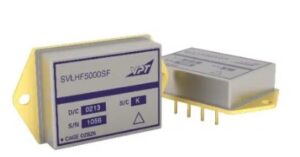
- SVLHF5015S DC-DC Converter – A rugged, radiation-qualified module with outputs from +3.3 V to +28 V, wide input range (30–60 V), and full military temperature range.
- SVSA2800D Series (30–60 W) – A dual-output, radiation-tolerant converter designed for LEO/MEO/GEO and deep-space missions.
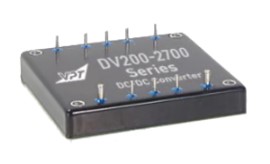
- VSC100 Series (‘NewSpace’ Converter) – A 100 W RLAT-tested module, ideal for CubeSats and small satellites where cost, mass, and power density must be balanced.
Applications by Sector
Space-grade power supplies serve a wide spectrum of mission needs. In satellites whether in LEO, MEO, or GEO these converters provide reliable power to instruments, communications payloads, and control systems, delivering long-term radiation resistance for missions exceeding 15 years. For deep-space probes, products like the SVSA and SVLHF series offer resilience for journeys spanning years without repair. Crewed and NewSpace platforms combine rapid deployment needs with the highest levels of reliability: missions such as ESA’s Phi-Sat-1 or Bellatrix’s Project 200 illustrate how power supplies must support advanced computing and propulsion technologies in compact packages. Finally, the same converters are essential for ground simulation and validation systems, providing mission-representative loads to guarantee spacecraft readiness before launch.
Conclusion & Call to Action
Space-grade power supplies aren’t just components they are the backbone of every mission where failure isn’t an option. From thermal resilience to radiation hardiness, these systems embody the pinnacle of engineering discipline.
Through Horizon Electronics and our exclusive collaboration with VPT, Israeli space initiatives gain access to top-tier space-qualified DC-DC converters rugged, reliable, and ready for the harshest conditions. Explore more on our Space Applications page and discover how the SVLHF5015S, SVSA2800D, and VSC100 Series are tailored to your mission’s needs whether traditional, deep-space, or NewSpace ventures.
Contact Horizon today to discuss how we can engineer your custom space-grade solutions.


